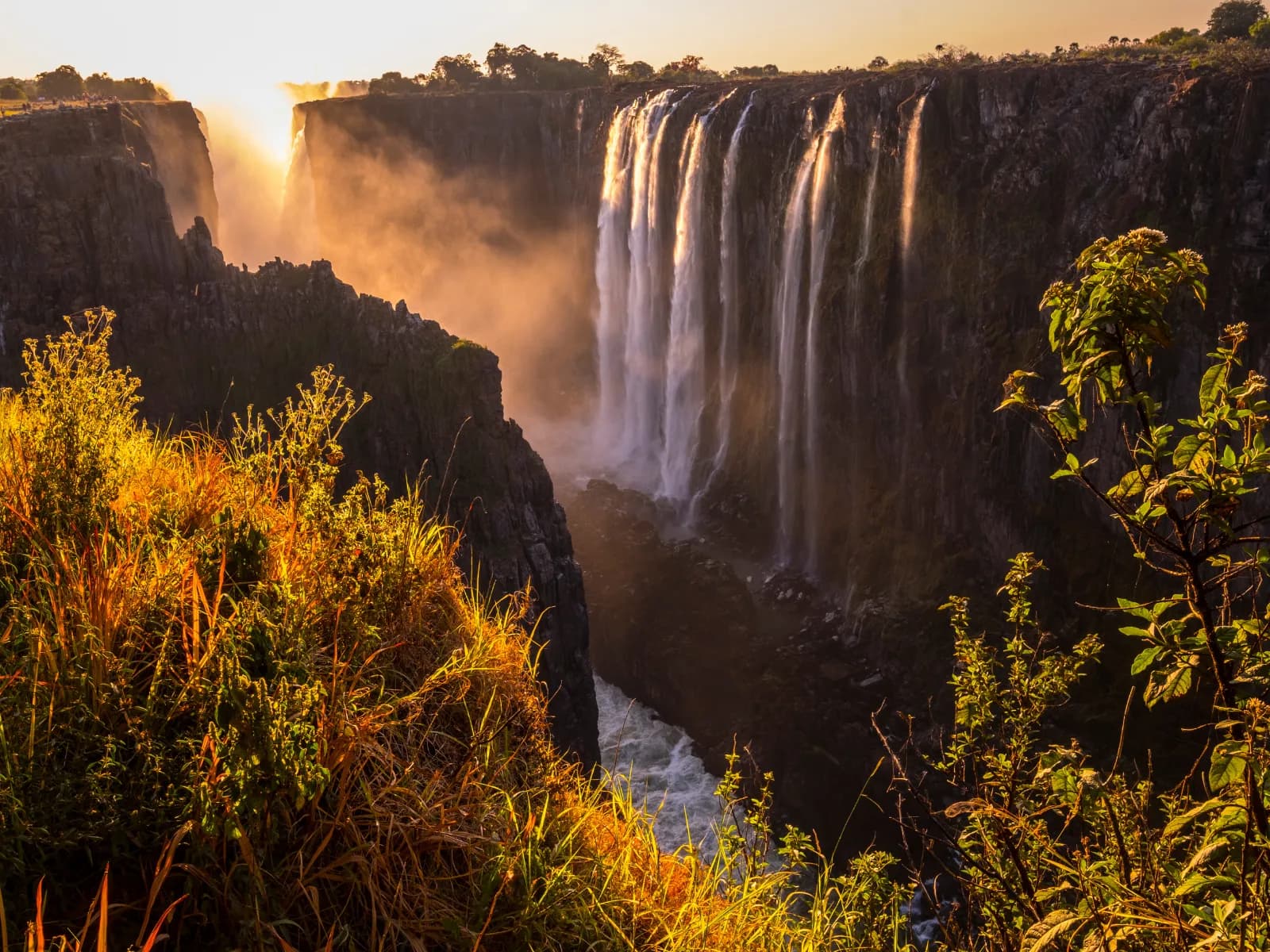
If you are planning a trip to Victoria Falls, one of the first questions you will probably ask is: when is the best time to visit? As guides, it is one of the questions we hear most often.
There is no single perfect month. Victoria Falls changes dramatically throughout the year: Zambezi water levels rise and fall, the rainforest changes, wildlife viewing varies, and some adventure activities suit particular conditions better than others.
The best time depends on what you want to experience—powerful Falls and spray, clear views of the gorge, a safari in Hwange National Park, a Zambezi sunset cruise, or white-water rafting.
When is the best time to visit Victoria Falls?
For many first-time visitors, February to May is an excellent time to experience Victoria Falls, as the Zambezi carries large volumes of water after the rainy season. Around March, April and May, the Falls can be especially spectacular, with enormous volumes pouring over the gorge and spray rising above the rainforest.
There is a trade-off: at high water, spray can make some viewpoints very misty, so panoramic photographs are not always as clear as expected. For clearer views of the rock formations, gorge and individual sections of the Falls, August to October is also an excellent period.
Our advice as local guides is not to choose your dates based only on the Falls. Think about the complete experience you want from your trip.
Victoria Falls throughout the year
- January–March: rainy season, rising river levels, green landscapes and dramatic weather.
- April–May: very high water levels, powerful Falls and spectacular spray.
- June–July: cooler, drier weather, Falls sightseeing and safari.
- August–September: dry season, lower water levels, clear views, wildlife and outdoor activities.
- October–November: hot and dry, with wildlife and adventure activities taking centre stage.
- December: rains begin, bringing green scenery and often fewer crowds.
January to March: the rainy season
The beginning of the year brings warm temperatures and increasing rainfall. The surrounding landscape turns green and the Zambezi gradually receives more water. It is a beautiful time for travellers who enjoy lush scenery and do not mind occasional heavy rain or more unpredictable weather.
Expect vibrant scenery, warmer temperatures, fewer visitors than peak periods and increasing Falls spray as the season progresses. By March, the Falls are becoming increasingly powerful.
April to May: Victoria Falls at high water
This is one of Victoria Falls' most dramatic periods. The Zambezi can carry enormous volumes over the Falls, with spray rising above the gorge, rainbows in the mist and lush vegetation around the rainforest. Bring waterproof clothing—or be prepared to get wet.
- Powerful Falls and dramatic photographs
- Heavy spray and rainbows
- Lush vegetation and an unforgettable first impression
More water does not always mean better visibility. Some viewpoints can be extremely misty at very high water, so travellers focused on photography and clear views may prefer another season.
June to July: a great balance
June and July are among our favourite months for a balanced Victoria Falls experience. The weather becomes cooler and drier while substantial water still flows over the Falls. It is an excellent period to combine Falls sightseeing, Zambezi River experiences and outdoor adventures with a safari in destinations such as Hwange National Park.
August to September: clear views and safari
As the dry season continues, water levels decrease, which can reveal clearer views of the Falls and gorge. Dry weather makes outdoor activities easier to plan, while wildlife viewing becomes increasingly rewarding as animals gather around available water sources.
- Clear Falls views and photography
- Game drives, safari and Zambezi cruises
- Outdoor adventures and a Hwange National Park combination
October to November: hot, dry and adventurous
October is typically one of the hottest times around Victoria Falls. Wildlife concentrates around water sources and some sections of the Falls have significantly less water, revealing more of the gorge's geological structure. It can be a rewarding period for safari enthusiasts and adventure travellers, provided they plan demanding activities for cooler parts of the day and carry plenty of water and sun protection.
December: green season begins
The first rains begin changing the dry, dusty scenery to green while temperatures remain warm. December can suit travellers who prefer greener landscapes and fewer crowds, although rain can be unpredictable, so flexibility is useful.
Choose the month that suits your trip
- For the biggest Falls and maximum water: April–May.
- For a balance of water, weather and activities: June–July.
- For clearer Falls views and photography: August–September.
- For wildlife and safari: August–October.
- For lush green scenery: January–March and December.
Weather, safari and rafting
Victoria Falls has distinct wet and dry periods. The rainy season is warm and can bring heavy afternoon storms; the dry season is usually more predictable and sunny, but October and November can be very hot. A hat, sunscreen, comfortable clothing and plenty of water are essential for long walks, game drives and outdoor activities.
Hwange National Park is within reach of Victoria Falls and is a strong option for a wider Zimbabwe safari. The dry season, generally from June through October, is popular because wildlife increasingly concentrates around water sources. Allow several days if you want to experience both the Falls and wildlife rather than treating Victoria Falls as a one-day stop.
White-water rafting is affected by river conditions. Water levels can change the available route, and rafting may pause or be adjusted for safety at high water. If rafting is central to your visit, confirm current conditions with your tour operator before booking.
What to pack
- Comfortable walking shoes and lightweight clothing
- A hat or cap, sunscreen and insect repellent
- A reusable water bottle and camera or smartphone
- A light rain jacket and waterproof protection for electronics
Waterproof protection is especially important in the high-water period, when spray from the Falls can be surprisingly powerful.
So, when should you visit?
There is no single best time to visit Victoria Falls. For an enormous wall of water surrounded by spray and rainbows, choose the high-water period. For clearer views combined with safari and outdoor adventures, the dry season may suit you better. The rainy season offers a completely different reward: Zimbabwe's landscapes turning green.
Whatever season you choose, give yourself enough time to slow down and experience Victoria Falls properly. We look forward to welcoming you to Zimbabwe.

Author
Shalom Andrew